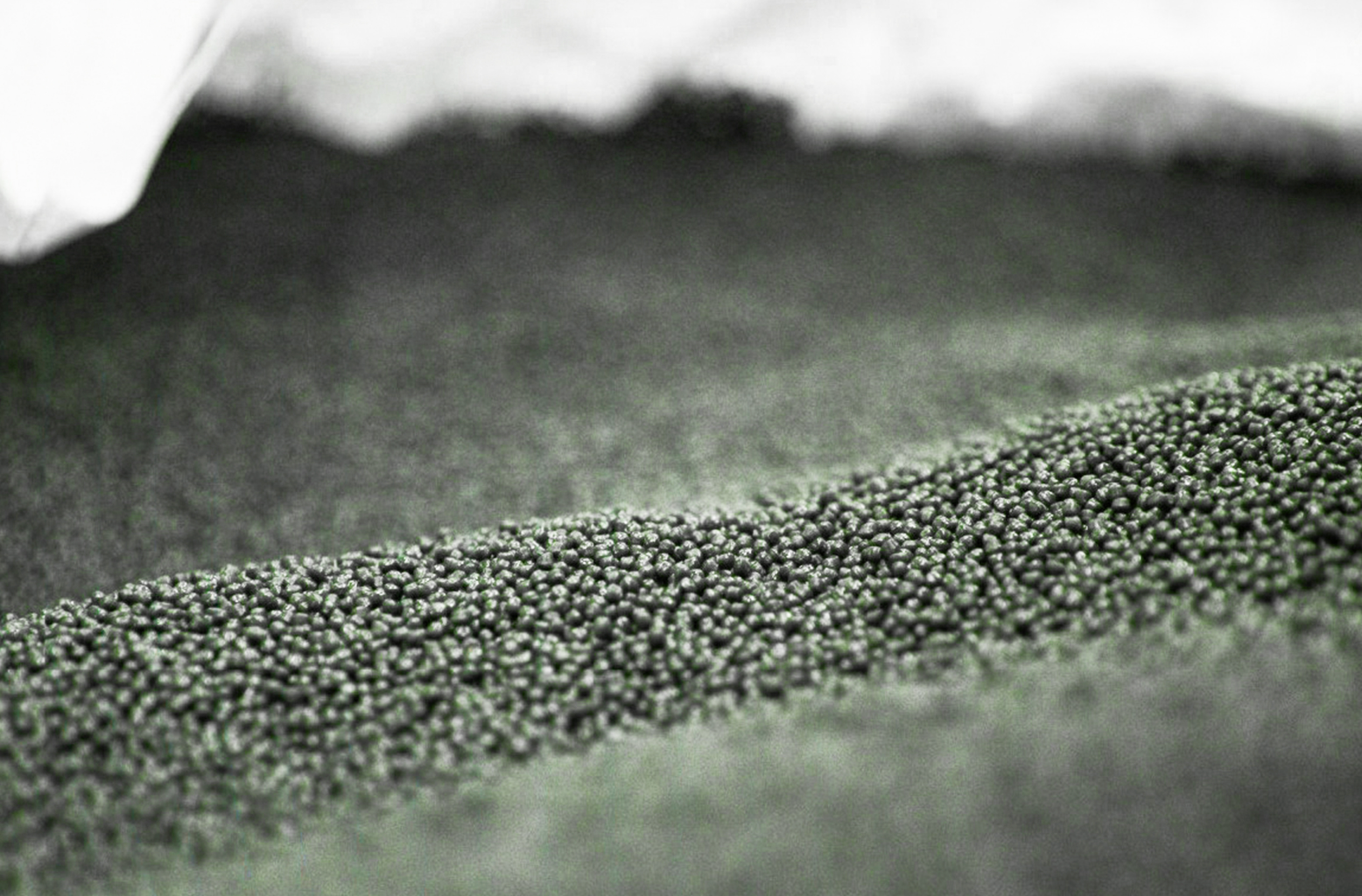
Innovative and Ephemeral Materials
At the heart of our urns is an innovative, biologically circular material based on polyhydroxyalkanoates (PHA). This material is formed by microorganisms as a natural energy reservoir. This process is replicated for industrial production: In fermentation plants, the polymer is created from renewable raw materials such as plant sugars or vegetable oils and then further processed into a high-quality, bio-based material. Due to its high purity and good biocompatibility, PHA is already used in demanding areas such as medicine, agriculture, and biodegradable packaging.
For modern funeral culture, the natural life cycle of this material is particularly crucial. Under suitable conditions, PHA is broken down back into its natural components by microorganisms in the soil. Our urns therefore biodegrade in the earth over time – the degradation rate depends on the respective soil and environmental conditions of the region. Important to note: Compared to other natural material products, no permanently remaining plastic residues or microplastic particles are generated.
Our urns are approved for natural burials and certified by FriedWald. In addition to their ecological function, we attach great importance to aesthetics and haptics: By adding natural mineral fillers, such as from eggshells or other minerals, a high-quality, matte surface with a natural appearance is created. This results in an urn that combines sustainable material innovation with a dignified and timeless design.
Questions and Answers
What is PHA?
Microorganisms need energy to survive. If they have an abundance of carbohydrates or fats, such as sugar or vegetable oil, they store this energy in the form of PHA – similar to how humans store fat as an energy reserve. Scientists have learned to feed these microorganisms in large tanks so that they produce as much PHA as possible. The PHA is then extracted from the microorganisms and processed into products – such as environmentally friendly urns.
Furthermore, PHA also finds diverse applications in medicine, cosmetics, and agriculture. "Polyhydroxyalkanoates (PHAs) are the most promising solution to the major ecological problem of plastic accumulation. The biodegradable and biocompatible properties of PHAs make them particularly sought after in the fields of medicine and agriculture."
Source: PMC

Why is PHA sustainable?
PHA is obtained from renewable raw materials and is completely biodegradable – in soil, water or in appropriate composting plants. It decomposes through natural processes without harmful degradation products. Since it can be processed similarly to plastic, PHA is considered a promising and sustainable alternative to conventional plastics. In addition, it contributes to biological recyclability. Another advantage of PHA lies in its unique feel.
By adding natural fillers such as egg shells or other natural minerals, it differs significantly from classic plastics and conveys a high-quality, natural aesthetic.
Discover our Urns
-
Model 1 - Moonlight Grey
Vendor:circartRegular price €109,20 EURRegular priceUnit price / perSale price €109,20 EUR -
Model 1 - Pistachio Green
Vendor:circartRegular price €109,20 EURRegular priceUnit price / perSale price €109,20 EUR -
Model 1 - Forest Green
Vendor:circartRegular price €109,20 EURRegular priceUnit price / perSale price €109,20 EUR -
Model 2 - Moonlight Grey
Vendor:circartRegular price €109,20 EURRegular priceUnit price / perSale price €109,20 EUR -
Model 2 - Pistachio Green
Vendor:circartRegular price €109,20 EURRegular priceUnit price / perSale price €109,20 EUR -
Model Mini - Pistachio Green
Vendor:circartRegular price €16,76 EURRegular priceUnit price / perSale price €16,76 EUR